




If you want a golden glow without wasting time lying outside for hours, one question matters more than most: what is the best time of day to tan in the sun? It sounds simple, but the answer depends on your skin type, the UV index, how quickly you normally tan, and whether you are trying to build colour gradually rather than rush into a long session that leaves you red instead of bronzed.
For most people, the goal is not just to get darker as fast as possible. The real goal is to tan more efficiently, get a more even result, and avoid overdoing UV exposure in a single sitting. That is why timing matters. Sun intensity changes across the day, and your skin responds differently in softer morning sun than it does during harsh midday conditions.
In this guide, we’ll break down when the sun is strongest, when many tanners prefer to go outside, how long sessions should usually last, and how products like tanning accelerators can support your routine. If you’ve ever wondered whether you should tan at 10am, 1pm, or later in the afternoon, this is the practical answer.
What is the best time of day to tan in the sun?
The best time of day to tan in the sun is usually late morning to early afternoon, but only when you manage exposure carefully. In practical terms, many experienced sun tanners aim for a window between around 10am and 2pm because UVB levels are high enough to stimulate melanin production more efficiently than early morning or late evening sunlight.
That said, “best” does not mean “longest.” Stronger sun means your skin can respond faster, but it also means you can go too far faster. If you tan during this higher-UV window, shorter sessions make far more sense than trying to stay out for hours. People chasing colour often make the mistake of thinking a longer session automatically means a better result. In reality, once your skin is stressed, you risk redness, dryness, peeling, and patchiness, which can ruin the tan you were trying to build.
If you have fair skin or you are just getting started for the season, the best approach is usually to use that stronger part of the day in very controlled doses. If you already tan easily and rarely burn, you may tolerate that window better, but the same rule still applies: efficiency beats excess.
Why tanning time matters so much
Your skin tans because UV radiation triggers melanin production. Melanin is the pigment responsible for the colour change you see after sun exposure. The catch is that the tanning process is tied to the same exposure that can also irritate or damage the skin if you overdo it. That is why the timing of your session matters almost as much as the length of the session.
In very weak sun, especially early in the morning or near sunset, you may spend a long time outside and see little progress. In very intense midday sun, you may get faster results but also raise the risk of burning if you stay out too long. The sweet spot is not about chasing the harshest possible sun; it is about using useful UV levels in a measured way.
Timing also affects how even your tan looks. When you are overheating, sweating heavily, or constantly shifting because the sun feels too aggressive, you are less likely to tan comfortably and consistently. A more controlled session often produces better-looking results than an extreme one.
Morning vs midday vs afternoon sun for tanning
Morning sun: Early morning sunlight is often more comfortable, especially on hot days, but UV levels are usually lower. That means it may feel pleasant, yet the tanning response can be slower. If you burn easily, this softer light can help you ease into a routine, but it is generally not the fastest option for building noticeable colour.
Midday to early afternoon sun: This is often the most effective time for tanning because UV levels are stronger. If your goal is to tan in the sun rather than simply sit outside, this is the period when your skin is most likely to respond efficiently. The downside is obvious: it is also the time when careless overexposure becomes more likely.
Late afternoon sun: Later afternoon can still be useful, especially in summer, but the tanning effect usually slows down as the sun drops. Some people like splitting their time into shorter sessions rather than doing one long spell in the peak heat. That can feel more manageable and may suit people trying to build colour gradually.
If you want the blunt answer, midday wins for efficiency, but only when paired with common sense and shorter sessions.
How long should you tan for in one session?
There is no perfect number that fits everyone, because skin type changes everything. A naturally fair person who burns quickly should never copy the routine of someone with darker, more UV-tolerant skin. As a rough practical guide, beginners often start with short sessions and build slowly over time instead of jumping straight into extended exposure.
For many people, 15 to 30 minutes per side is more than enough for a controlled session in stronger sun, especially at the start of a tanning routine. Some will need less. Some may tolerate a bit more. The point is to leave the sun before your skin starts telling you that you’ve pushed it too far.
If you finish a session and your skin feels hot, tight, or looks obviously pink, that is a sign you are not tanning efficiently. You are edging into damage territory, and that often leads to peeling rather than the deeper, longer-lasting glow people actually want.
How skin type changes the best tanning window
Fair skin usually needs a more cautious strategy. If you burn easily, you may still prefer late morning instead of the absolute strongest midday slot, or you may keep your sessions very brief during peak UV. Controlled exposure and patience matter far more than trying to force fast results.
Medium skin tones often have more flexibility. Many people in this category can build colour steadily with short, repeated sessions around late morning or early afternoon, especially if they keep skin hydrated and avoid pushing past their limit.
Darker skin tones often tan more easily and may take longer to visibly burn, but that does not mean there is no limit. Overexposure can still dry the skin, create uneven tone, and leave the tan looking dull rather than rich. A smarter routine still works better than an extreme one.
Knowing your own pattern matters more than copying generic online advice. If you always go pink after a certain amount of time, treat that as your ceiling and stay under it.
Should you tan every day?
Daily tanning sounds tempting when you want quick results, but more is not always better. Your skin needs time to respond and recover. Back-to-back long sessions can leave the surface dehydrated and irritated, which often makes the final colour look worse, not better.
Many people get better-looking results from a consistent but moderate routine rather than hammering the sun every single day. Think gradual colour build-up, not panic tanning. Shorter, smarter sessions usually beat a chaotic pattern of overdoing it one day and hiding indoors the next because you got too much sun.
If you are preparing for a holiday or event, start earlier instead of trying to compress everything into a few intense days. A gradual tan is usually more even, more comfortable, and more likely to last.
How to tan more evenly in the sun
Even colour comes from preparation as much as timing. Exfoliating gently beforehand can help remove dry, flaky skin so the tan develops more smoothly. Hydrated skin also tends to look better and hold colour more evenly than neglected, dry skin.
When you are tanning outdoors, move and rotate regularly rather than lying in one position forever. Areas like shoulders, chest, and thighs may catch stronger sun depending on your angle, so staying aware helps prevent obvious uneven patches.
Your product choice matters too. A good tanning accelerator can help support a richer-looking result while also improving the feel and finish of the skin. That does not mean it replaces careful sun exposure, but it can absolutely improve the overall routine when used properly.
Do tanning accelerators help when sun tanning?
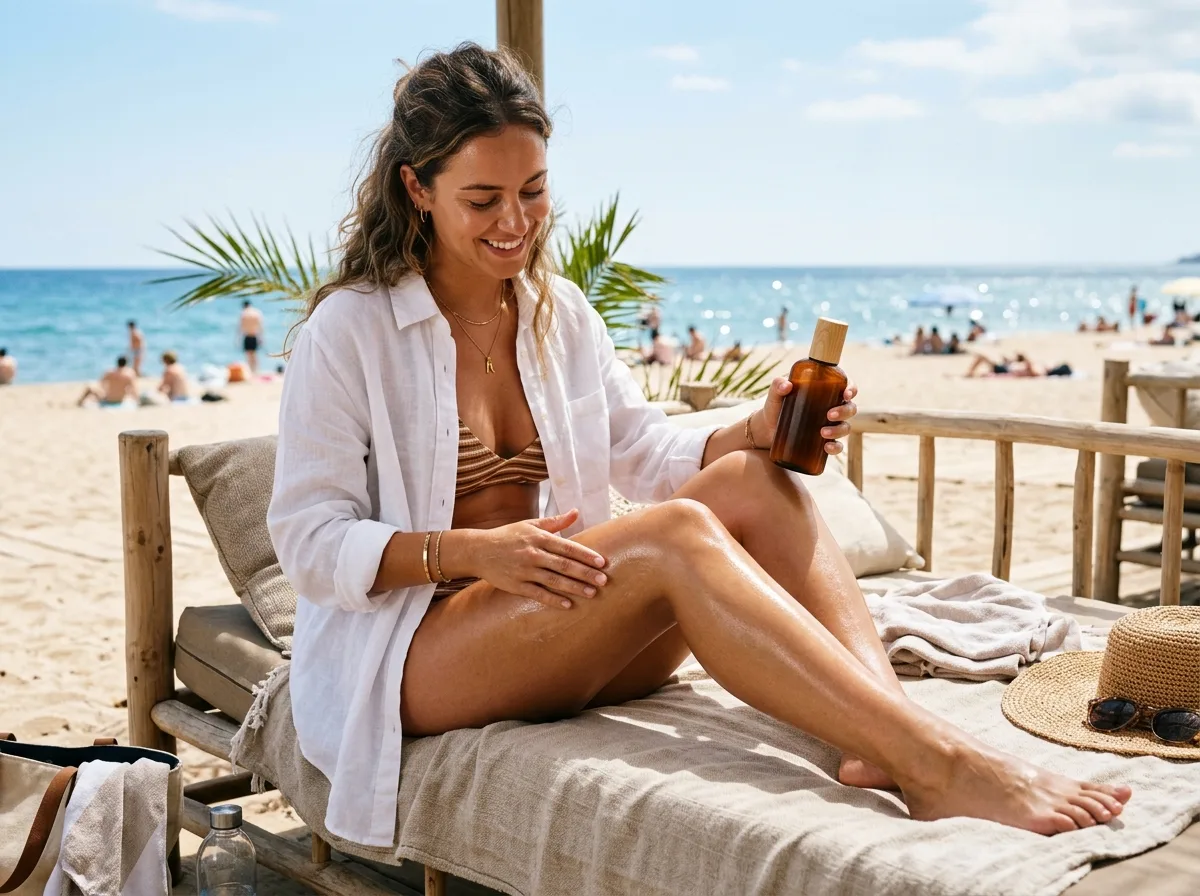
Yes, many people use tanning accelerators during sun tanning to help encourage a deeper, more even glow. The right formula can support the tanning process, keep skin feeling smoother, and improve how the final colour looks. That is one reason products in the So Damn Tanned range are popular with people who want to maximise their tanning routine without relying on a dry, bare-skin approach.
The important thing is to understand what a tanning accelerator is and what it is not. It is not a magic shortcut that lets you ignore your limits. It works best as part of a routine that includes smart session timing, gradual exposure, and decent aftercare.
If you are tanning outdoors, an accelerator may help you get more from well-managed sessions. Many tanners find that their skin looks more nourished, their tan develops more evenly, and the colour they build appears richer than when they skip products entirely.
Mistakes that stop you getting a good sun tan
One of the biggest mistakes is tanning for too long in one go. People often assume that if 30 minutes is good, 2 hours must be better. Usually it is not. Overexposure can leave the skin stressed, and stressed skin rarely gives the smooth, luxurious bronze people actually want.
Another common mistake is tanning on dry, neglected skin. If the surface is rough or dehydrated, the result can look patchy and fade faster. Skipping aftercare is just as bad. The tan does not end when you get off the sun lounger or towel. What you do afterwards affects how long that colour sticks around.
A third mistake is ignoring the weather and UV index. A breezy day can feel less intense than it actually is, which tricks people into staying out longer. Feeling comfortable is not the same thing as being in weak sun.
How to make your tan last longer after using an accelerator
Once you have built some colour, the next goal is making it last. Start with hydration. Moisturised skin simply looks better and tends to hold onto a tan more evenly than skin that is dry and flaky. Use a good body moisturiser regularly, especially after showering.
Try to avoid harsh exfoliation straight after tanning. Gentle skin prep before a session is useful, but aggressive scrubs afterwards can strip away the surface layers that make your tan look fresh. Lukewarm showers also help; very hot water can dry the skin out and make fading more obvious.
Keep your routine consistent. If you use an accelerator that leaves your skin feeling soft and conditioned, carry that mindset into your aftercare too. The best tans are rarely about one heroic session. They usually come from a full routine: prep well, tan sensibly, hydrate properly, and top up gradually.
Best time of day to tan in the sun if you are a beginner
If you are new to sun tanning, the smartest move is to avoid treating the strongest part of the day like a competition. Beginners often do well with shorter sessions in the late morning, then adjust based on how their skin reacts. You want enough UV to encourage tanning, but not so much that your first few sessions turn into damage control.
Watch how your skin behaves over the next 12 to 24 hours. If you are getting pink, you need to cut back. If you are comfortable and slowly deepening in colour, your routine is probably closer to the mark. Beginners who go gradually often end up with a better tan than people who try to blast themselves brown in one weekend.
Best time of day to tan in the sun before a holiday
If you are building a glow before going away, consistency matters more than intensity. Short sessions during useful UV hours across a couple of weeks will usually serve you better than a few over-the-top attempts. A more measured build-up often gives you an even base and reduces the chance of arriving on holiday already dry, irritated, or peeling.
This is also where product support becomes useful. A good tanning accelerator, paired with moisturising aftercare, can help your skin stay looking smoother while you build colour gradually. If your goal is to arrive bronzed, not blotchy, patience wins.
Final thoughts on the best time of day to tan
So, what is the best time of day to tan in the sun? For most people, the answer is late morning to early afternoon, when UV levels are strong enough to produce better tanning results without needing endless time outdoors. But the real secret is not just the clock. It is combining the right timing with sensible session length, skin awareness, and a routine that supports a deeper, more even glow.
If you want a tan that actually looks good, think smarter rather than harsher. Build gradually, keep skin hydrated, and use products that help you get more from each controlled session. That approach usually beats the old-fashioned idea that suffering in the sun for hours is somehow the quickest route to bronze. It is not. The better route is efficient, consistent, and a lot less chaotic.