If you love getting a deeper glow but your skin reacts badly to heavy fragrances, harsh actives, or overly rich formulas, you are not imagining it. Sensitive skin can turn a tanning session into an itchy, blotchy mess when the product is wrong. The good news is that you do not have to avoid tanning products completely. You just need to choose smarter. The best tanning accelerator for sensitive skin is not the darkest, strongest, or most hyped bottle on the shelf. It is the one that supports your skin barrier, avoids common irritants, and helps you tan more comfortably without making your skin feel tight, hot, or reactive.
That matters because tanning products are often marketed around speed and intensity. A lot of them are loaded with perfume, tingling ingredients, bronzers, or rich oils that can be too much for reactive skin. If you are prone to dryness, eczema flare-ups, redness, or random stinging from skincare, you need a gentler approach. Choosing a formula that feels boring in the best possible way is usually the smarter move. Sensitive skin tends to do better with calm hydration, simple ingredient lists, and products that work with your skin instead of pushing it.
In this guide, we will break down what actually makes a tanning product gentler, which ingredients are worth looking for, which red flags to skip, and how to build a tanning routine that keeps irritation low. We will also cover how to patch test properly, how to spot marketing fluff, and how to make your results last longer without overdoing it. If you have ever wondered how to shop for a product that helps you glow without making your skin angry, this is where to start.
Why sensitive skin needs a different approach to tanning products
Sensitive skin is not one single skin type. For some people it means dryness and tightness. For others it means redness, a burning sensation, or easy irritation from fragrance and active ingredients. Some people have diagnosed conditions such as eczema or rosacea, while others simply know that their skin complains the second a product is too strong. In every case, the common thread is that the skin barrier is easier to disrupt.
When the skin barrier is compromised, water escapes more easily and irritants get in faster. That is why a product that feels fine on one person can feel prickly or overwhelming on someone else. In the tanning world, that can show up in a few ways: redness after application, patchiness because dry areas grab too much product, clogged-feeling skin from heavy formulas, or discomfort during and after UV exposure when the skin is already under stress.
A gentler tanning product helps reduce those risks. It should support hydration, spread evenly, and leave the skin feeling comfortable rather than overloaded. That does not mean it has to be weak or useless. It just means the formula needs to be balanced. Sensitive skin usually responds better to steady, consistent support than to aggressive shortcuts.
What “best tanning accelerator for sensitive skin” really means
When people search for the best tanning accelerator for sensitive skin, they often assume the answer is a single hero product. In reality, the best choice depends on your triggers. Some people react most to fragrance. Others cannot tolerate tingling agents. Some need lighter lotions because heavy butters feel suffocating, while others need richer hydration because dryness causes patchiness. A good sensitive-skin-friendly tanning accelerator should meet a few core standards.
First, it should be gentle on contact. If a product causes immediate stinging, that is not your skin “adjusting.” It is a sign to stop. Second, it should help keep the skin surface moisturised so your tan develops more evenly. Third, it should avoid unnecessary extras that make sensitive skin more likely to react, especially strong fragrance and gimmicky heat or tingle effects. Finally, it should fit into a routine you can use consistently, because consistency usually gives better results than using an intense product once and spending the next week repairing your skin.
Think of the keyword here as comfort plus performance. You are not shopping for the most extreme product. You are shopping for the one that lets sensitive skin stay calm enough to tan evenly.
Ingredients that are usually kinder to reactive skin
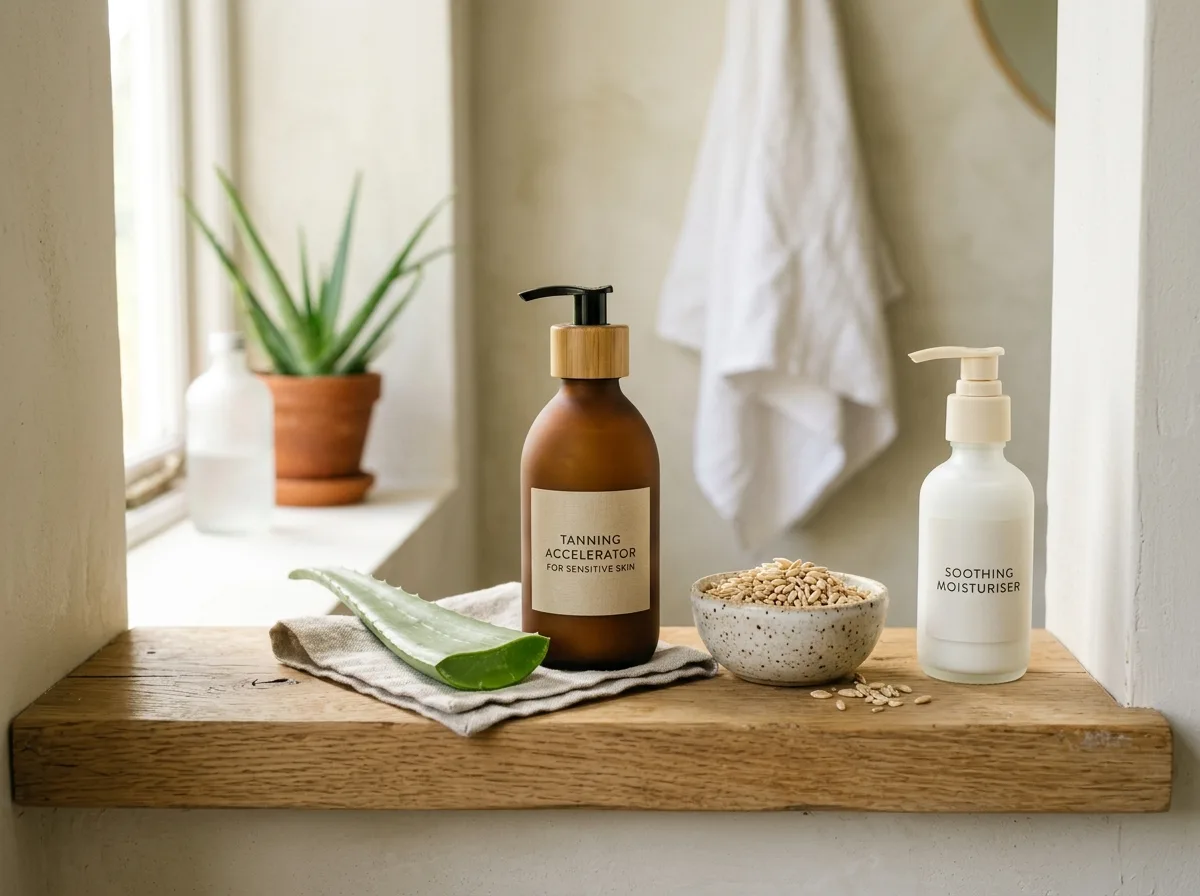
Hydration is the main thing to prioritise. Sensitive skin often tans more evenly when it is well moisturised, because dry, flaky areas are more likely to become rough and uneven. Look for ingredients like glycerin, hyaluronic acid, aloe vera, panthenol, squalane, oat extract, allantoin, or light plant oils that your skin already tolerates. These ingredients can help the skin feel softer and more supported without automatically making the formula feel greasy.
Barrier-supporting ingredients are also helpful. Ceramides are excellent if you can find them in a body product, and colloidal oatmeal can be a great choice for skin that gets itchy or visibly irritated. Shea butter can work well for some people, though if you dislike very rich formulas you may prefer a lighter lotion texture. The point is not to chase trendy ingredients. It is to choose ingredients that reduce dryness and help the skin stay comfortable.
Some tanning accelerators also include tyrosine or similar amino acid-based ingredients that are marketed to support the tanning process. If your skin tolerates them, that is fine, but they should not come at the expense of the rest of the formula. On sensitive skin, the surrounding formula matters more than the headline ingredient. A simple hydrating accelerator with a calm finish is often a better bet than a flashy formula full of potential irritants.
Ingredients and product claims worth being cautious about
Fragrance is one of the biggest problem areas for sensitive skin. Plenty of people tolerate scented products just fine, but if you already know your skin gets red or itchy from perfumed body care, a strong tropical fragrance is not doing you any favours. “Unscented” or very lightly scented formulas are usually safer than heavily perfumed ones. Be aware that “natural fragrance” is not automatically gentler either.
Tingle products are another major red flag. These are designed to create a warming, tingling sensation, often by increasing blood flow at the skin surface. That feeling is deliberate, but sensitive skin often interprets it as straight-up irritation. If you are trying to find the best tanning accelerator for sensitive skin, tingle products are usually the wrong category entirely. The same caution applies to products that advertise extreme heat, hot action, or intense stimulation.
Very dark cosmetic bronzers can also be tricky if your skin is reactive, especially if you are using them alongside other body products. They are not always irritating, but they can make it harder to tell whether your skin is actually happy or whether the colour payoff is masking irritation and unevenness. If you want to keep things simple, start with a non-tingle, low-fragrance accelerator rather than a heavily bronzed formula.
Finally, be cautious with long ingredient lists packed with botanicals, essential oils, and “spa” extracts. More ingredients do not always mean a better product. For sensitive skin, more can simply mean more possible triggers.
How to read a label without getting distracted by marketing
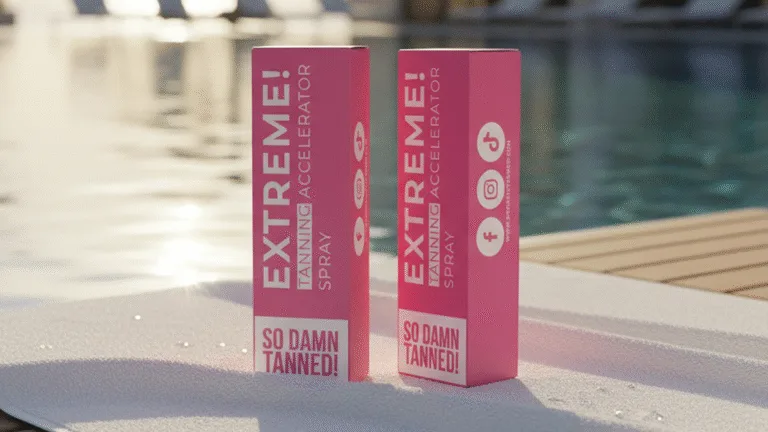
Tanning products are full of dramatic language. You will see words like ultra, extreme, black, rapid, hot, triple, turbo, and intense all over the place. Those words are designed to sell excitement, but they do not automatically tell you whether a formula is suitable for your skin. For sensitive skin, you need to read beyond the front label.
Start with the texture and purpose. Is it a lotion, gel, butter, or oil-heavy formula? If you know your skin hates heavy occlusive products, a lighter lotion might suit you better. If your skin gets dry and patchy, a richer cream might help. Then scan the ingredient list for the basics: humectants, soothing ingredients, and the presence or absence of obvious triggers such as strong fragrance components or tingle claims.
Also pay attention to how the brand describes the experience. Phrases like “warming sensation,” “hot results,” or “maximum intensity” usually mean this is not the lane for reactive skin. On the other hand, wording around hydration, conditioning, softness, and skin comfort tends to be more promising. No label can guarantee zero reaction, but the language often gives you clues about whether the formula was designed for comfort or drama.
Patch testing is not optional if your skin is easily irritated
It is tempting to skip patch testing, especially if a product sounds gentle and the reviews look good. Do not. Patch testing is one of the simplest ways to avoid ruining your skin barrier over a product that was never right for you in the first place. Apply a small amount to an area like the inner arm or a discreet section of the outer body and wait at least 24 hours if possible. Watch for redness, itching, bumps, or a burning sensation.
If you are planning to use the product before a sunbed session or outdoor tanning day, patch test several days in advance rather than on the same day. That gives your skin time to show a delayed reaction. It also stops you from stacking irritation, because UV exposure plus a brand-new product is not a clever experiment when you already know your skin is reactive.
Keep the rest of your routine calm while testing. Do not combine a new tanning lotion with exfoliating acids, harsh scrubs, or heavily fragranced body products at the same time. If your skin reacts, you want to know which product caused it.
How to build a gentler tanning routine from start to finish
The product matters, but the routine around it matters too. Start with clean skin that is not stripped raw. A gentle shower and a soft washcloth are enough for most people. If you exfoliate, keep it mild and avoid aggressive scrubs that leave the skin feeling sore. Sensitive skin generally prefers a softer prep routine done consistently rather than a once-a-week deep scrub that causes micro-irritation.
Before applying any accelerator, make sure your skin is well moisturised in the days leading up to tanning. This does not mean piling on random body butters an hour before. It means keeping the skin barrier in decent shape overall. Dry skin is more reactive skin, and it is also more likely to tan unevenly.
Apply the product in a thin, even layer. More is not always better. Over-application can make skin feel sticky, congested, or uncomfortable, especially if you are already sensitive to textures. Let the product settle properly and always follow responsible exposure habits. A gentle formula does not make overexposure safe. It only makes the product side of the equation more manageable.
Signs a product is not actually gentle enough for you
Sometimes a product is popular, well-reviewed, and technically designed to be moisturising, but it is still not right for your skin. The signs are usually pretty obvious once you stop talking yourself out of them. If your skin stings on application, feels unusually hot, becomes visibly red beyond normal warmth, develops a rash, or feels itchy later in the day, that product is not your match.
Less dramatic signs matter too. If your skin feels tight after use, if dry patches look worse, or if your tan develops unevenly because certain areas are clearly irritated, that still counts as a bad fit. Sensitive skin often gives quieter warnings before it goes fully into revolt. Listen early and you will save yourself a lot of hassle.
It is also worth paying attention to your nose and your patience. If the smell is so strong that you dread using it, or the texture feels smothering enough that you apply it reluctantly, you probably will not use it consistently. A good product for sensitive skin should feel manageable, not like a compromise you hate every time.
How to make your tan last longer after using an accelerator
Once you have found a formula your skin actually tolerates, the next step is maintaining your result without irritating your skin all over again. The easiest win is daily hydration. Use a simple, fragrance-light body moisturiser that keeps your skin soft without competing with the tanning product. Well-hydrated skin tends to hold a tan-looking finish more evenly because it does not flake off in rough patches.
Keep showers lukewarm rather than very hot, because excessive heat can dry the skin out fast. Pat the skin dry instead of rubbing aggressively with a towel. Skip rough scrubs and harsh exfoliants when you are trying to preserve both comfort and colour. If you need to smooth texture, use a soft cloth and a light touch rather than going at your skin like it insulted you.
You should also avoid constantly switching products. Sensitive skin likes predictability. If you have one accelerator and one everyday moisturiser that work well together, sticking to them is usually more useful than chasing every new bottle that promises darker results in less time. Stable skin nearly always looks better than irritated skin, even before colour enters the conversation.
Who should be extra careful, even with gentle products
If you have active eczema, recent dermatitis, broken skin, sunburn, or a known fragrance allergy, be especially cautious. In some cases the smartest move is to avoid tanning products altogether until your skin is calm again. Applying even a gentle accelerator to inflamed skin can be uncomfortable and may worsen the situation. The same goes for freshly shaved or over-exfoliated skin, which can be more reactive than usual.
If you are unsure whether your skin reaction history is compatible with a product category, it is worth asking a pharmacist or dermatologist, especially if you have had repeated reactions to body care before. A product being common or trendy does not make it harmless for your specific skin.
Final thoughts on choosing gentler tanning products for sensitive skin
The best tanning accelerator for sensitive skin is rarely the loudest bottle or the most intense formula. It is the one that helps your skin stay calm, hydrated, and comfortable enough to tan evenly. Look for simple moisturising formulas, avoid obvious irritants like strong fragrance and tingle claims, and patch test before you commit. Sensitive skin rewards patience and consistency far more than it rewards drama.
If you remember one thing, make it this: a gentler tanning product is not a downgrade. For reactive skin, it is usually the smarter path to better-looking results. When your skin barrier is supported, everything else tends to go more smoothly. That means less irritation, less patchiness, and a much better chance of actually enjoying the process instead of spending days repairing the fallout.